inquiry
Leave Your Message
0%

In the fast-changing world of civil engineering and construction, keeping up with the best Field Survey Equipment is more important than ever. Experts often talk about how crucial it is to have the right tools on hand. Take James Thompson from GeoTech Solutions, for example — he emphasizes that "the success of your project really depends on the quality of your survey data." Honestly, that really hits home as we look towards 2026.

As technology keeps moving forward, the tools we use for field surveys need to evolve too. Advances in GPS tech are honestly changing the game for accuracy. Some of the old methods are starting to feel a bit outdated. Drones for aerial surveys, in particular, are gaining tons of popularity because they get the job done faster and more efficiently. But, you know, some folks still hold on to the older tech, hesitant to change. That kind of resistance can really hold a project back.

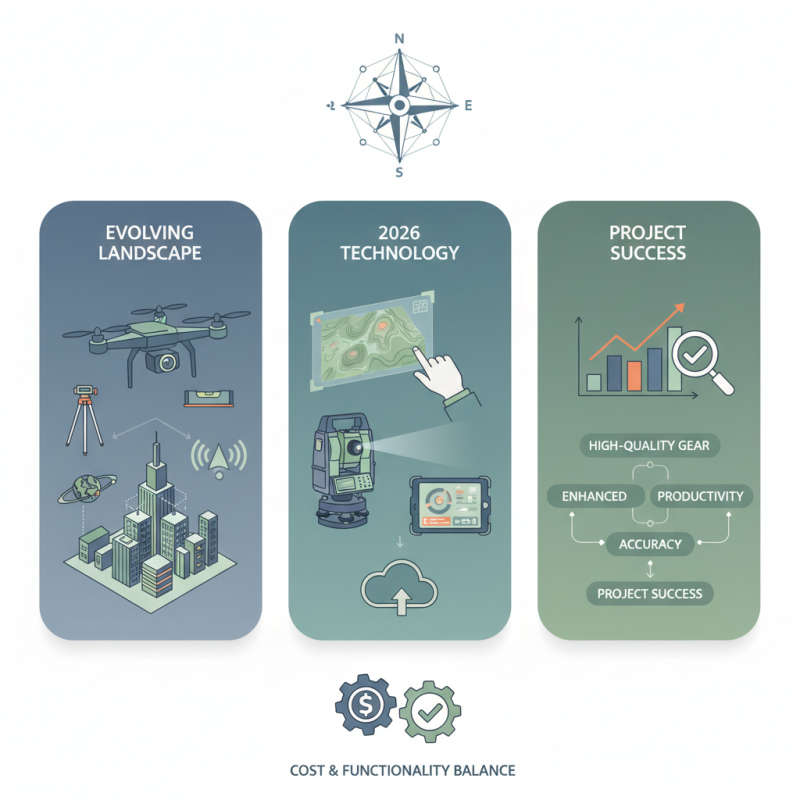
With so many different options out there when it comes to Field Survey Equipment, decision-makers are faced with some pretty big choices. Investing in good quality gear can definitely boost productivity and get more precise results. Still, balancing the cost versus what the equipment offers is tricky — no lie. So, industry leaders really need to weigh their options carefully. Picking the right tools doesn’t just make workflows smoother; it could even make or break the success of a project in this competitive market.
Top Field Survey Equipment to Use in 2026?

Emerging Trends in Field Survey Equipment for 2026

The field of survey technology is evolving rapidly. In 2026, we expect to see cutting-edge equipment that enhances efficiency and accuracy. Autonomous drones are becoming more common. They fly over challenging terrains, collecting data seamlessly. Surveyors can access hard-to-reach locations. This saves time and reduces risks.

Another trend is the rise of AI-integrated tools. These tools analyze data in real-time, providing useful insights. This technology can detect patterns quickly. However, the reliance on algorithms could lead to overconfidence. Surveyors must remain vigilant and verify findings manually. New handheld devices are also gaining popularity. They are compact, yet packed with features. These devices make field work more manageable.

Yet, not all innovations are flawless. Field Survey Technology can sometimes yield inconsistent results. Factors like weather and terrain play a significant role. There’s a growing need for better training and awareness. Users must understand the limitations of new equipment. Embracing technology is crucial, but caution is necessary.

Key Technologies Shaping the Future of Surveying Tools

The future of surveying tools is being shaped by significant technological advancements. Robotics and automation are at the forefront of this transformation. Recent reports indicate that automation in surveying could enhance efficiency by up to 40%. These technologies allow for data collection in environments that are difficult or dangerous for humans.

Additionally, drones are changing the landscape of field surveys. They provide high-resolution aerial imagery with quick deployment. A study showed that using drones can reduce surveying time by 75% compared to traditional methods. Meanwhile, geospatial data analytics is becoming more sophisticated, enabling professionals to interpret complex datasets easily.

However, reliance on technology brings challenges. Equipment can malfunction or require constant updates. Professionals must continually adapt to keep pace. As demand for data accuracy grows, the need for regular training becomes essential. Despite these hurdles, the path towards innovative surveying tools is promising and ever-evolving.

Top Field Survey Equipment to Use in 2026

Equipment Type Key Features Applications Expected Trends in 2026
LiDAR Scanners High-resolution 3D mapping, rapid data collection Topographic surveys, forestry, urban planning Increased use in environmental monitoring and drones
GPS/GNSS Systems Real-time positioning, high accuracy Land surveying, construction, geolocation services Advancements in satellite technology for better precision
Drones Aerial imaging, thermal mapping Agriculture, infrastructure inspection, mapping Integration with AI for automated data analysis
Total Stations Angle measurement, distance measurement Construction, land boundary surveys Greater connectivity with digital work environments
3D Modeling Software Visualization, simulation, data integration Urban planning, terrain modeling Improved collaboration features and usability enhancements

Essential Features to Look for in Modern Field Survey Equipment

When choosing field survey equipment in 2026, consider essential features that enhance accuracy and usability. Accurate GPS technology is key. Devices should include advanced satellite systems. This ensures Precise Positioning, even in challenging environments. Battery life is another crucial aspect. Fieldwork often lasts long hours. Therefore, equipment should support extended use without constant recharging.

Modern devices should be user-friendly. Intuitive interfaces are vital for efficiency. Look for touchscreen displays that respond well to gloved hands or wet conditions. Additionally, Rtk Field Software can greatly enhance data accuracy. Integrating this software allows for real-time correction, minimizing errors in measurement.

While high-tech features are appealing, reliability must not be overlooked. Equipment can malfunction in the field. Regular maintenance and software updates are essential to avoid unexpected issues. A balance between advanced technology and practical reliability is necessary. The field survey experience can be greatly improved with the right tools and careful consideration of their features.

Top Manufacturers of Field Survey Equipment to Watch in 2026

Top Field Survey Equipment to Use in 2026?

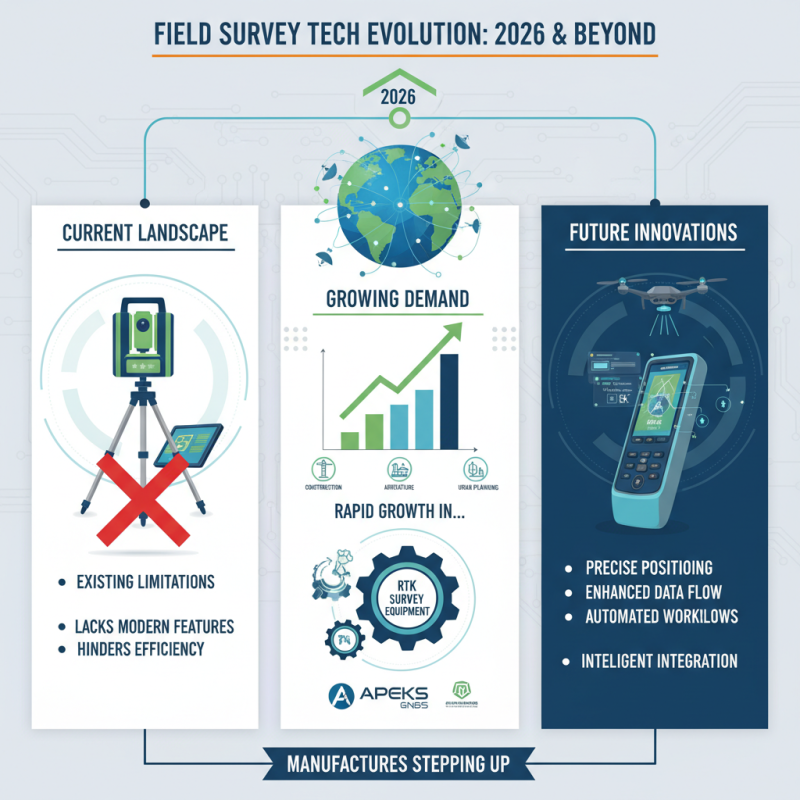
In 2026, Field Survey Technology will evolve rapidly. Various manufacturers are stepping up to meet the growing demand. Companies focusing onRtk Survey Equipment are at the forefront. They offer precise positioning and data collection capabilities. New innovations are necessary, though. Existing equipment lacks some modern features, which can hinder efficiency.

While many brands capture attention, some struggle to innovate. Equipment reliability remains a concern. Users want tools that won’t fail in critical moments. Manufacturers need to address quality issues. Updates in software and hardware are vital. Some products are still too complicated for average users. Simplicity and effectiveness should guide new designs.

The competitive landscape is shifting. Manufacturers that prioritize customer feedback may thrive. It's essential to listen to users’ experiences. They can provide insight into real-world applications. Navigating these challenges will determine success in the field survey equipment market. Emphasizing quality and user-friendliness will set leading producers apart.

Innovative Surveying Solutions: Drones and Remote Sensing Technology

In 2026, drones and remote sensing technology will redefine the field survey landscape. Industry reports suggest a surge in aerial survey integration, with expectations that drone usage will increase by 70% in the coming years. These devices provide real-time data collection, capturing high-resolution imagery and 3D models. They allow surveyors to perform tasks faster and safer than traditional methods.

Remote sensing technologies are also making waves. Satellite imagery can cover vast areas quickly, often with accuracy margins of less than 5 meters. Yet, reliance on this technology poses challenges. Environmental factors can obscure data quality. Moreover, the complex algorithms needed for data interpretation might lead to miscalculations if not properly validated.

As the industry evolves, surveyors must address these flaws. Despite advancements, some processes still rely heavily on manual checks and analyses. This indicates that while innovation is crucial, it’s essential to find a balance between technology and human oversight. Continuous training in emerging technologies is vital. Without it, surveyors may face greater risks of error in their data interpretations.

The Role of AI and Data Analytics in Surveying Equipment

The integration of AI and data analytics in surveying is changing the industry. AI algorithms can process complex datasets quickly. This helps surveyors make more informed decisions. For example, a report from MarketsandMarkets predicts the AI in surveying market will reach $1.2 billion by 2025. This indicates a strong trend toward technological adoption.

In practical terms, AI can enhance equipment efficiency. Live data analytics allow for real-time adjustments during surveys. Consequently, surveyors can identify issues instantly. However, this reliance on technology raises concerns. What if the algorithms make errors? Human oversight remains crucial in validating AI findings.

Moreover, the use of drones equipped with AI is becoming more common. Drones can survey large areas swiftly and accurately. A study noted that drone surveys could reduce time spent by 75%. Yet, the technology is not infallible. Environmental factors, like weather, can still disrupt drone operations. Surveyors must be ready to adapt. Embracing these developments is essential but not without challenges.

Sustainability Considerations in the Next Generation of Survey Tools

As we move toward 2026, sustainability will significantly shape the design and use of field survey equipment. Current reports suggest that over 60% of survey professionals prioritize eco-friendly tools. The shift towards renewable resources is evident. Professionals seek products that minimize environmental impact while maintaining high performance.

One notable area of growth is the development of solar-powered devices. These tools reduce reliance on batteries, lowering electronic waste. Research indicates that traditional battery production contributes significantly to carbon emissions. The use of solar solutions can cut these emissions by up to 30%. Moreover, materials recycling is becoming a standard consideration. Creating Ves Survey Equipment with recycled materials not only lowers costs but also reflects a commitment to sustainability.

Yet, challenges remain. Many manufacturers still prioritize profit over eco-conscious practices. Implementing sustainable solutions often requires upfront investment. This deterrent can slow down the acceptance of greener technologies. However, the long-term benefits are undeniable. With changing regulations and rising consumer demand, the pressure is on the industry to evolve. The path forward includes innovative designs that marry efficiency with responsibility. It's vital to create a future where survey equipment is both effective and sustainable.

FAQS

: What is the main purpose of this product?

: This product aims to enhance user experience and improve daily tasks.

Is it easy to use for beginners?

Yes, it is designed with user-friendly features. Some find it challenging initially.

Can this product be used in multiple environments?

Yes, it works well at home, in the office, and outdoors. Be cautious of extreme conditions.

Are there any safety precautions to consider?

Yes, avoid using it near water. Read the instructions for correct handling.

How can I maintain this product?

Regular cleaning is essential. Neglect may lead to performance issues.

What if I encounter a problem while using it?

Check the troubleshooting section. Some issues can be fixed easily.

Are there any limitations to this product?

Yes, it may not perform well in all situations. User feedback is valuable for improvements.

Is there any warranty offered?

A limited warranty is usually provided. Check the details for coverage specifics.

How does this product compare to alternatives?

It has unique features valued by users. However, some may prefer simpler options.

Can I get support if needed?

Yes, customer support is available. Response times may vary during peak hours.

Conclusion

As we look toward 2026, the field of field survey equipment is set to undergo significant transformation driven by emerging trends and innovative technologies. Key advancements in surveying tools will be shaped by the integration of drones and remote sensing technology, enhancing data collection and accuracy. Additionally, the application of artificial intelligence and data analytics will play a crucial role in improving efficiency and decision-making in survey processes.

When selecting modern field survey equipment, it's essential to identify features that support precision, usability, and sustainability. This includes durability, ease of integration with existing technologies, and eco-friendly design considerations. By focusing on these aspects, surveyors can adapt to the changing landscape of the industry and leverage the best tools available in the pursuit of accurate and sustainable surveying solutions.
Elena

Elena

Elena is a dedicated marketing professional at Shanghai Apekstool (APEKS), a leading provider of innovative geospatial surveying and mapping products. With a deep expertise in GNSS/GPS systems, total stations, levels, and theodolites, she plays a crucial role in communicating the core benefits and......
Previous Top 10 RTK Col Antenna Manufacturers from China at the 137th Canton Fair